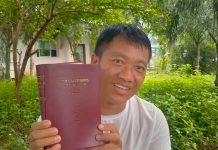
YUNNAN, China – 60-year-old Su Laiyou joined the Bai Yi Bible translation team in 2003 when it was first set up and has been dedicated to bringing God’s Word to his people in their heart language ever since.
An Arduous Journey
From financial constraints to a lack of technological support, the translation team has endured much hardship during this translation project.
Initially, the team had to handwrite the translation scripts for the Gospel of Matthew until 2005, when they received a computer loaded with Bai Yi language software and instructions for using the keyboard. While this was a more efficient way of recording the translated text, learning how to use the software was difficult and progress was slow.
"We will not be able to discern God’s will for ourselves."
Reasons for their dedication
Why are Su and his fellow translators so committed to the project despite such difficult circumstances?
The foremost reason is that the Bible is central to their faith and spiritual growth.
Without a Bible in their heart language, preaching and studying the Bible become laborious. A Bai Yi pastor has to first read the text from the Han Bible, mentally translating it into Bai Yi language before saying it aloud to his congregation. This process is long-drawn because most Bai Yi believers are not familiar with the Han language and there is the risk of misinterpretation or miscomprehension.
Sharing his thoughts on why the Han Bible alone is inadequate for their needs, Su opined, "If we do not have a Bible in our own language, Bai Yi believers will not be able to read God’s Word for themselves to gain a deeper, more personal understanding. Reading the Han Bible is akin to receiving the Word through hearsay and not directly from God. We will not be able to discern God’s will for ourselves."
"Moreover, most church members are not highly educated; few are fully literate and conversant in Mandarin. So the Chinese Bible is not very useful to us. If we have our own Bai Yi Bible, everyone will be able to read it for themselves."
"We must preserve this written language because it is part of who we are."
A second important reason is that having their own Bai Yi Bible helps preserve Bai Yi culture, much of which has been transformed through the Christian faith. Before the gospel reached them, their indigenous religion was Bimoism. People sought the help of shaman-priests known as Bimos for healing or exorcism. When the Bimos’ rites or advice failed, some turned to Jesus Christ for healing. As one chronically ill person after another experienced healing through faith in Christ, their testimonies spread. Before long, many accepted Jesus Christ as their Lord and Saviour.
Faith in Christ also broke the grip of alcohol on the community. After a day’s work in the marketplace, many men used to drink late into the night and collapse on the streets until morning. After their conversion, such scenes became rare.
Having a written language also plays a vital role in preserving Bai Yi culture and nurturing cultural pride and identity. Su shares, "We once had a written language long ago, but it was lost over time. In the early 19th century, Samuel Pollock, a Christian missionary, created a new writing system for us, and we have used it ever since. We must preserve this written language because it is part of who we are. If we lose it again, our community may weaken and decline."
Project Completion
By the middle of 2025, the Bai Yi translation was finally completed. It is now awaiting the necessary review and approval before Bible printing begins.
Many Bible translators like Su are deeply grateful for the faithful UBS supporters, whose generosity has made the translation work possible. With continued support, more ethnic minority people groups will be able to read God’s Word in their heart language.
Story: Angela Teo
Edited: Pamela Choo
Photos: UBSCP
2026@UBS China Partnership