ZHEJIANG, China – The growing Church in China needs to raise as many Bible teachers and preachers as possible to shepherd a large flock. These spiritual leaders need to be equipped with sound biblical interpretation skills to sustain the spiritual health of their congregations and train a new generation of leaders to continue their good work.
United Bible Societies (UBS) supports this endeavour by working with the churches in China to provide Bible teachers and seminary students with relevant training and resources to raise their calibre in preaching and teaching.
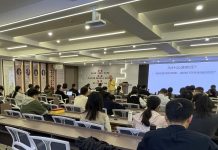
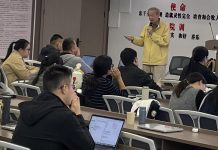
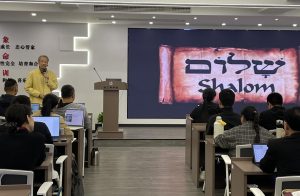
To this end, a two-day intensive course on Textual Criticism of the Hebrew Bible taught by Dr. Yu Suee Yan, former UBS Translation Consultant, was held at Zhejiang Seminary on 30-31 October 2025. Six sessions, each an hour long, were attended by 60 Bible teachers and seminary students. Topics taught included The Transmission of the Hebrew Bible, Textual Criticism of the Hebrew Bible, Research Tools, Reading the Hebrew Bible, Hermeneutics, and The Harmony of the Hebrew Bible.
Dr. Yu Suee Yan’s seminars helped participants understand the history and transmission of the biblical texts. The course systematically traced the long journey of the Hebrew Bible — from oral tradition to written form, from original manuscripts to repeated copying. By the end of the course, participants found assurance that the Bible we hold today did not appear out of thin air but had been passed down through countless hands over the course of history.
One participant shared a key takeaway regarding the emergence of “variant readings” of Scripture. “Dr. Yu explained that the earliest texts were written on parchment or papyrus, which wore out with frequent use, requiring many scribes to copy them. Not all scribes were meticulous — some copied word-for-word, while others made changes or added their own interpretations or annotations. Whether due to internal copying errors, authorial style, or external factors like scribal quality and historical context, the course dissected the sources of textual differences.
“This helped me realise that the coexistence of variants is not simply a matter of right or wrong, but reflects linguistic, cultural, and theological considerations in the transmission process. Minor differences do not undermine scriptural truth. We shouldn’t dismiss any version lightly, but rather seek to understand the thinking and historical context behind its copying and translation — even considering the ancient audience and why God spoke to them in that way.”
The course, which focused on imparting technical and analytical skills, interestingly led participants to reflect on the deeper implications of such lessons.
One Bible teacher thought about his own presuppositions when reading Scripture. Another considered how knowledge of manuscripts, variants, and translations can nourish the spiritual lives of believers or relate directly to pastoral ministry today.
Some post-training resolutions included exploring how insights from textual criticism can become resources for pastoral care and giving due regard to the historical context of Scripture while delivering relevant contemporary messages in their sermons.
It is encouraging to see how this course has inspired participants to handle Scripture with greater care — returning to the original text, comparing translations, considering historical background, and seeking a balance between interpretation and application.
May God help these Bible teachers to remain faithful to the ancient revelation while illuminating life in current times.
Read more about what participants like Chen Yi and Shi have to say about the course on our website.
Story: Angela Teo
Photo: UBSCP
2026 © United Bible Societies China Partnership